Other Med-Surg (MSK, Immuno/Onc, Integument/Burns, Hematology)
Source: NCSBN/ANA National Guidelines for Nursing Delegation, 2019.
Other Med-Surg (MSK, Immuno/Onc, Integument/Burns, Hematology)
Study aid only. Oncologic emergencies and burn fluid formulas are facility/protocol-driven. Not a procedural manual.
Why it matters on NCLEX
Source: NCSBN/ANA National Guidelines for Nursing Delegation, 2019.
These “other” topics show up as safety bombs: compartment syndrome, neutropenia fever, burns ABCs, HIT bleeding/clotting paradox, sickle crisis, DIC, chemo/radiation safety. High yield for priority and SATA.
Topic A — Fractures, compartment syndrome, osteoporosis & hip fracture
Source: Surviving Sepsis Campaign, 2021.
Pathophysiology / concept
Source: ATS/IDSA community-acquired pneumonia guideline, 2019.
Bone break → bleeding, soft-tissue swelling. Casts/edema in closed fascial compartments → rising pressure → ischemia of muscle/nerve (compartment syndrome) — time-critical limb threat. Fat embolism risk after long-bone/pelvic fractures (esp. young adults).
Osteoporosis: low bone mass → fragility fractures (hip, spine, wrist). Hip fracture in older adults: fall risk, delirium, DVT/pneumonia/skin breakdown post-op.
Assessment cues
Source: Surviving Sepsis Campaign, 2021.
Fracture: pain, deformity, loss of function, crepitus, swelling.
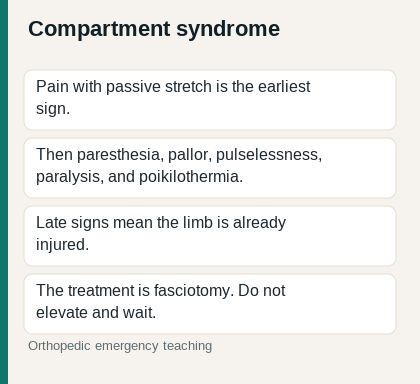
Compartment (6 Ps): Pain out of proportion / pain on passive stretch (early), Pressure, Paresthesia, Pallor, Paralysis (late), Pulselessness (late — don’t wait for it).
Fat embolism: respiratory distress, neuro changes, petechiae after fracture.
Hip fracture: shortened externally rotated leg; groin/hip pain; can’t bear weight.
Priority nursing actions
Source: NCSBN/ANA National Guidelines for Nursing Delegation, 2019.
- Immobilize; neurovascular checks distal to injury frequently.
- Elevate per orders (but if compartment suspected, elevation may be limited — follow protocol; notify provider immediately).
- Ice as ordered; pain control; tetanus status.
- Open fracture: cover with sterile dressing; antibiotics as ordered.
- Traction care: weights hang free; alignment; skin/pin care.
- Fat embolism: O₂, support ABCs, notify provider.
- Hip fracture: ABCs, pain, immobilize as ordered; post-op: abduction pillow per prosthesis type, NV checks, DVT prophylaxis, early PT as ordered, delirium watch, skin care; don’t flex hip acutely beyond ordered limits for some approaches.
Osteoporosis teaching
Source: Surviving Sepsis Campaign, 2021.
Weight-bearing exercise as cleared; calcium/vit D per plan; fall prevention (home hazards, vision, meds); bisphosphonate key points (upright after dose, water, esophageal irritation); smoking/alcohol reduction.
Client teaching (casts)
Source: Surviving Sepsis Campaign, 2021.
Keep dry; don’t stick objects inside; report numbness/color change/increased pain; mobility/weight-bearing as ordered; DVT prevention.
Safety / red flags
Source: Surviving Sepsis Campaign, 2021.
Pain out of proportion after cast/fracture = compartment until proven otherwise. Pulseless is late. Sudden dyspnea after long-bone fracture = fat embolism concern.
Delegation notes
Source: NCSBN/ANA National Guidelines for Nursing Delegation, 2019.
UAP can report client complaints of numbness; RN performs NV assessment.
Remember this
Source: Surviving Sepsis Campaign, 2021.
Compartment = pain out of proportion + passive stretch pain → call now. Hip fracture = NV + DVT + delirium + positioning rules.
Topic B — Rheumatoid vs osteoarthritis, gout
Source: Surviving Sepsis Campaign, 2021.
Comparison (teaching lens)
Source: 2025 ACC/AHA acute coronary syndromes guideline.
| Osteoarthritis | Rheumatoid arthritis | |
|---|---|---|
| Pattern | Wear-and-tear; weight-bearing joints | Autoimmune; symmetric small joints common |
| Stiffness | Worse with use; brief morning stiffness | Prolonged morning stiffness |
| Systemic | Local | Fatigue, fever, extra-articular possible |
| Care | Weight loss, exercise, acetaminophen/NSAIDs per orders, joint protection | DMARDs/biologics infection risk, energy conservation, flare planning |
Gout
Source: Surviving Sepsis Campaign, 2021.
Uric acid crystal arthritis — often great toe. Acute: severe pain, swelling, redness. Teaching: meds as ordered (colchicine/NSAIDs/steroids acute; allopurinol chronic — don’t start/stop casually during acute flare without orders); hydrate; limit alcohol/purine-heavy patterns as taught; avoid triggering crash diets.
Remember this
Source: 2025 ACC/AHA acute coronary syndromes guideline.
OA = use-related; RA = autoimmune systemic + infection risk on immunosuppressants. Gout = hydrate + med adherence + flare vs prevention teaching.
Topic C — Immuno / oncology, SLE, chemo/radiation safety
Source: Surviving Sepsis Campaign, 2021.
Pathophysiology / concept
Source: Surviving Sepsis Campaign, 2021.
Chemo/radiation suppress marrow → neutropenia (infection risk), thrombocytopenia (bleed), anemia (fatigue/O₂ carry). Oncologic emergencies: febrile neutropenia, tumor lysis, SVC syndrome, spinal cord compression (high-level recognition).
SLE (lupus): autoimmune multisystem — butterfly rash, photosensitivity, arthritis, renal/CNS involvement possible; flares with sun/stress/infection; immunosuppressant infection risk.
Assessment cues
Source: 2025 ACC/AHA acute coronary syndromes guideline.
Fever in neutropenic client = emergency energy even if they “look okay.” Mucositis, cough, dysuria may be muted. ANC low. SLE: new edema/HTN (renal), chest pain, neuro changes — escalate.
Priority nursing actions
Source: NCSBN/ANA National Guidelines for Nursing Delegation, 2019.
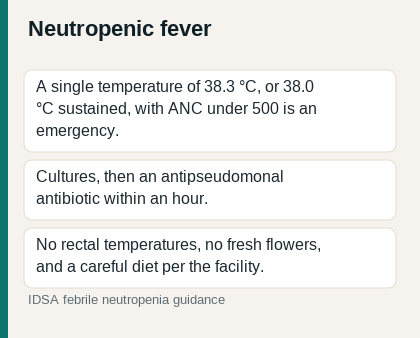
Neutropenic precautions: private room when indicated; hand hygiene; avoid sick visitors/fresh flowers per policy; no rectal temps; meticulous oral care; cultures + prompt antibiotics for fever as ordered.
Soft toothbrush; avoid invasive procedures when possible; bleed precautions if platelets low.
Tumor lysis: hydration, allopurinol/rasburicase, monitor K⁺/phos/uric acid/Ca²⁺.
Chemo / radiation safety for nurses
Source: Surviving Sepsis Campaign, 2021.
- Chemo: PPE per policy for mixing/admin/disposal; don’t crush chemo casually; spill kits; pregnant staff often restricted from handling — follow policy.
- Extravasation: know vesicant protocols — stop infusion, don’t just “flush harder,” follow antidote/protocol.
- Radiation: time, distance, shielding; cluster care; dosimeter when required; sealed source — tongs/lead container; body fluids may have restrictions after some therapies — follow radiation safety officer rules.
- Skin: don’t wash off markings; gentle skin care; report moist desquamation.
Skin cancer ABCDE teaching
Source: Surviving Sepsis Campaign, 2021.
Asymmetry, Border irregularity, Color variation, Diameter (concerning if growing / often taught >6 mm), Evolving — report changing moles; sun protection (SPF, shade, no tanning beds).
Client teaching
Source: Surviving Sepsis Campaign, 2021.
- Report fever immediately (exact threshold per oncology team).
- Food safety; avoid crowds when counts nadir.
- Electric razor; avoid contact sports if platelets low.
- SLE: sunscreen, med adherence, report infection/flare cues, contraception counseling if teratogenic meds.
Safety / red flags
Source: Surviving Sepsis Campaign, 2021.
Febrile neutropenia. Uncontrolled chemo nausea → dehydration. New back pain + leg weakness in cancer client (cord compression). Facial/arm swelling + cancer (SVC).
Remember this
Source: Surviving Sepsis Campaign, 2021.
Fever + neutropenia = urgent antibiotics pathway. Chemo = PPE + extravasation know-how. ABCDE for skin lesions. SLE = sun + infection + organ flare watch.
Topic D — Integument, pressure injuries, wound healing & burns
Source: NPIAP pressure-injury staging, 2016.
Pressure injury staging (review)
Source: NPIAP pressure-injury staging, 2016.
- Stage 1: non-blanchable erythema, intact skin.
- Stage 2: partial-thickness loss with exposed viable pink/red dermis; intact or ruptured serum-filled blister. Does not include skin tears, burns, abrasions, or moisture-associated skin damage.
- Stage 3: full-thickness skin loss; fat may show; no exposed bone/tendon/muscle.
- Stage 4: exposed bone/tendon/muscle.
- Unstageable: base obscured by eschar/slough.
- DTPI: deep maroon/purple discoloration.
Never reverse-stage (“Stage 4 healing” not “Stage 2”). Turn q2h; offload heels; nutrition (protein/calories); moisture management; support surfaces.
Wound healing factors
Source: NPIAP pressure-injury staging, 2016.
Favor: perfusion, nutrition, glycemic control, moist wound healing as ordered, clean technique. Impair: smoking, steroids, infection, ischemia, malnutrition, edema, radiation.
Burns — pathophysiology / concept
Source: Surviving Sepsis Campaign, 2021.
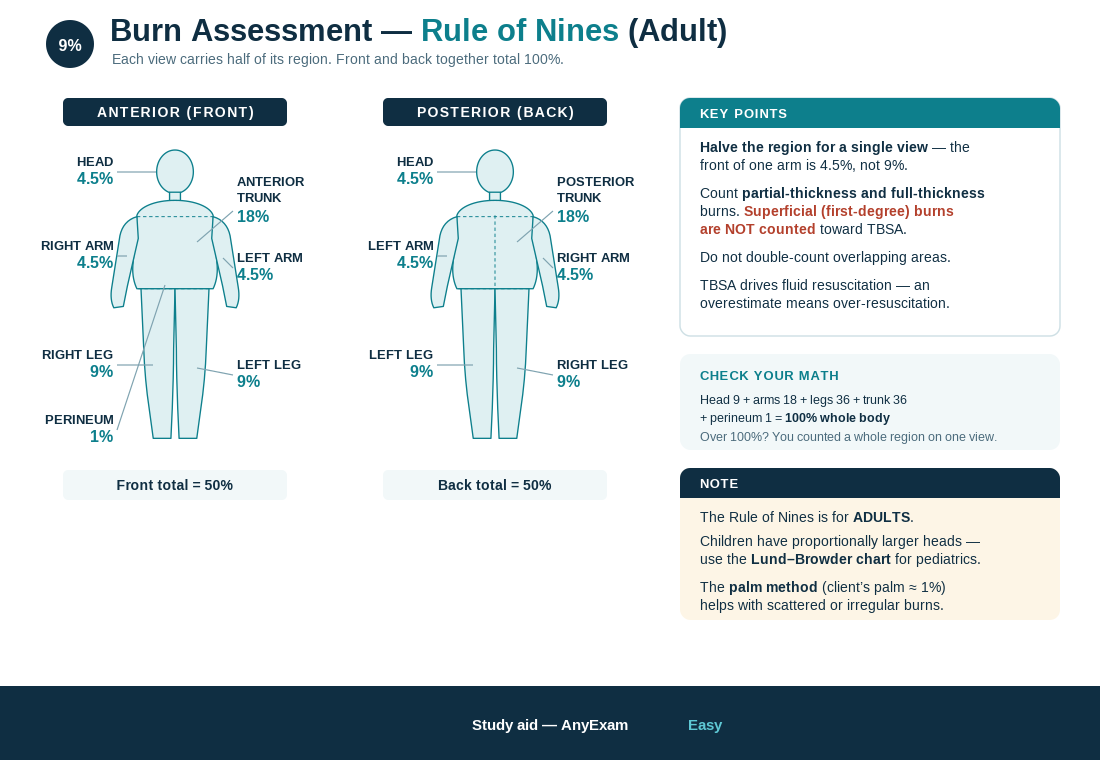
Burns destroy skin barrier → fluid loss, infection, heat loss. Depth: superficial → partial → full thickness. Rule of nines for TBSA adult. Capillary leak early → hypovolemia; then fluid remobilization later.
Assessment cues (burns)
Source: Surviving Sepsis Campaign, 2021.
Airway: facial burns, singed nasal hair, hoarseness, carbonaceous sputum → inhalation injury. Circumferential chest burns → ventilation restriction. Pain severe in partial thickness; full thickness may be insensate.
Priority nursing actions (burns)
Source: NCSBN/ANA National Guidelines for Nursing Delegation, 2019.
- Airway first — early intubation if inhalation suspected.
- Stop burning process; remove constricting jewelry/clothing if not stuck.
- Fluid resuscitation per protocol (Parkland-style concepts — large burns need aggressive LR as ordered).
- Warm environment; sterile/clean dressing per protocol; tetanus.
- Pain control; monitor UOP as resuscitation endpoint (~0.5 mL/kg/hr adults commonly cited — confirm orders).
- Infection prevention; nutrition (hypermetabolic).
- Circumferential limb: watch compartment; escharotomy as provider procedure.
Client teaching / rehab
Source: Surviving Sepsis Campaign, 2021.
Positioning to prevent contractures; PT/OT; sun protection of healed skin; psychosocial support.
Safety / red flags
Source: Surviving Sepsis Campaign, 2021.
Hoarse voice after smoke exposure. Drooling/stridor. Circumferential torso burn with rising ventilatory pressures.
Remember this
Source: NPIAP pressure-injury staging, 2016.
Burns: airway > fluids > infection/pain/contractures. Pressure injuries: stage accurately, offload, nutrition. Don’t reverse-stage.
Topic E — Hematology: anemia, sickle cell, HIT, DIC
Source: Surviving Sepsis Campaign, 2021.
Anemia concept
Source: Surviving Sepsis Campaign, 2021.
↓ RBC/Hgb → fatigue, pallor, dyspnea on exertion, tachycardia. Causes: blood loss, hemolysis, production failure (iron/B12/folate, marrow).
Sickle cell crisis priorities
Source: AHA/ASA early management of ischemic stroke, 2019.
Vaso-occlusive pain crises, infection risk (functional asplenia), acute chest syndrome (chest pain, fever, hypoxia — emergency energy), stroke risk.
Priorities: fluids, opioids (believe the pain), O₂ if hypoxic, treat infection triggers, incentive spirometry, warm environment, hydroxyurea key points as ordered; avoid high altitude/dehydration extremes as taught.
HIT (heparin-induced thrombocytopenia) high-level
Source: Surviving Sepsis Campaign, 2021.
Immune reaction to heparin → platelet drop with paradoxical thrombosis risk. Stop all heparin (including flushes) as ordered; use alternative anticoagulation per protocol; avoid platelet transfusions routinely in HIT (can worsen thrombosis — follow specialist orders). Timing often 5–10 days after heparin, or sooner if re-exposed.
DIC overview
Source: Surviving Sepsis Campaign, 2021.
Widespread clotting → consumption of platelets/factors → bleeding + clotting together. Triggers: sepsis, trauma, abruptio, malignancy. Cues: oozing from sites, petechiae, ↑ PT/PTT, ↓ platelets/fibrinogen, ↑ D-dimer.
Nurse: treat cause; support ABCs; blood products as ordered; avoid unnecessary sticks; gentle care — don’t invent heparin vs antifibrinolytic battles without orders.
Priority actions (anemia)
Source: NCSBN/ANA National Guidelines for Nursing Delegation, 2019.
O₂ if hypoxic; transfusion as ordered; conserve energy; treat cause.
Remember this
Source: Surviving Sepsis Campaign, 2021.
HIT = stop heparin, watch clots. Sickle = hydration + pain + O₂ + infection vigilance + acute chest. DIC = bleed + clot; treat cause. Anemia = cause + symptoms + transfusion per orders.
HIV opportunistic infection (not encyclopedia)
Source: ATS/IDSA community-acquired pneumonia guideline, 2019.
Focus on immunity down → opportunistic risk up: pneumonia (including PCP when CD4 low — know “report fever/dyspnea early”), oral thrush, TB exposure caution, live vaccine caution when immunocompromised. ART adherence prevents resistance; standard precautions (not isolation solely for HIV status). Teach: safer sex, no sharing needles, infection reporting, medication timing.
Remember this
Source: CDC isolation precautions, 2007.
HIV nursing = adherence + infection vigilance + dignity + standard precautions; CD4/viral load trends matter.
Clinical judgment vignettes — immune, MSK, sensory, integument
Source: Surviving Sepsis Campaign, 2021.
Vignette A — Compartment syndrome
Source: Surviving Sepsis Campaign, 2021.
Stem: Casted tibia; pain out of proportion, pain on passive stretch, paresthesia.
First: Notify provider NOW — loosen dressings per protocol, keep limb at heart level — don’t elevate high or ice blindly if it worsens arterial flow; fasciotomy pathway.
Vignette B — Neutropenic fever
Source: CDC isolation precautions, 2007.
Stem: ANC 400; T 38.5°C; “feels fine.”
First: Cultures + prompt Abx pathway; protective precautions — don’t wait for “looks sick.”
Vignette C — Burn fluid & airway
Source: Surviving Sepsis Campaign, 2021.
Stem: Facial burns, singed nasal hairs, hoarse voice.
First: Airway — early intubation before swelling closes airway; then fluid resuscitation per Parkland-style orders, rule of nines estimate, hypothermia prevention, infection control.
Immune / oncology hooks
Source: Surviving Sepsis Campaign, 2021.
- Radiation skin care; chemo nadir timing; mucositis; tumor lysis (K⁺/phos/uric acid) monitoring.
- Anaphylaxis to chemo/abx: epi IM, airway.
- Graft-vs-host high-level post-transplant.
MSK / cast / traction
Source: ACOG Practice Bulletin 183 on postpartum hemorrhage, 2017.
- Neurovascular 6 Ps: pain, pressure, paralysis, paresthesia, pallor, pulselessness.
- Fat embolism after long-bone fracture: petechiae, dyspnea, confusion.
- Osteomyelitis: fever + bone pain; long Abx.
- Amputation: phantom pain real; hemorrhage watch; contracture prevention (prone for AKA).
Sensory
Source: Surviving Sepsis Campaign, 2021.
- Cataract post-op: no ↑IOP (no bending/lifting/straining); shield.
- Glaucoma: sudden pain/halos = angle-closure emergency.
- Retinal detachment: curtain/floaters — urgent.
- Meniere: safety with vertigo; fall risk.
- Hearing aid care; speak facing client.
Integument / burns / wounds
Source: CDC isolation precautions, 2007.
- Staging pressure injuries; never massage a reddened bony prominence.
- Stevens-Johnson / TEN: stop offending drug; airway/fluid/skin like burn care.
- Cellulitis vs abscess; MRSA contact precautions as indicated.
Extra concept checks
Source: NCSBN/ANA National Guidelines for Nursing Delegation, 2019.
Q7. Pain out of proportion after cast — priority?
A. Extra blanket
B. Notify provider for compartment evaluation now
C. Ambulate to increase circulation only
D. Ignore if pulses still present (pulselessness is late)
Answer: B. Pulselessness is late — act on pain/stretch pain early.
Medication highlights — other med-surg
Source: NPIAP pressure-injury staging, 2016.
| Hook | |
|---|---|
| Allopurinol / colchicine | Gout; hydration; interactions |
| Bisphosphonates | Sit upright after PO; jaw osteonecrosis rare teaching |
| Methotrexate | Folate; infection; liver; pregnancy avoid |
| Biologics / immunosuppressants | Infection risk; TB screen |
| Eyedrops | Punctal occlusion; wait between drops |
| Silver sulfadiazine / burn topicals | Allergy/sulfa; wound assessment |
Concept check
Source: NCSBN/ANA National Guidelines for Nursing Delegation, 2019.
Q1. Casted tibia client reports severe pain unrelieved by opioids and pain on passive toe motion. Best action?
A. Tell them to relax
B. Notify provider immediately for possible compartment syndrome
C. Elevate extremely high and wait 8 hours
D. Remove cast yourself without help
Q2. Neutropenic chemo client has T 38.4°C (101.1°F). Priority ?
A. Wait until next clinic visit next week
B. Urgent evaluation, cultures, prompt antibiotics as ordered
C. Fresh flower bouquet therapy first
D. Rectal temperature q1h
Q3. Platelets halved after a week of heparin and a new DVT appears. Nurse anticipates:
A. Increase heparin dose casually
B. Stop heparin products and switch anticoagulation per protocol (HIT concern)
C. Give IM injections freely
D. Ignore platelet trend
Q4. Older adult with shortened externally rotated leg after a fall. Priority cluster?
A. Force them to walk to “test” the hip
B. Immobilize as ordered, pain control, NV checks, prepare for surgical pathway, watch for delirium/DVT risk
C. Apply heating pad under knee and discharge
D. Only document and leave
Q5. Client teaching that best matches rheumatoid arthritis on biologics?
A. Skip infection precautions — joints only
B. Report fever early; infection risk from immunosuppression; energy conservation
C. Hold all vaccines forever without asking
D. Double DMARD doses during flares without orders
Q6. Sickle cell client with chest pain, fever, and SpO₂ 88%. Priority ?
A. Assume anxiety and encourage shopping
B. Treat as possible acute chest — O₂, notify provider, support ABCs, follow crisis protocols
C. Restrict all fluids
D. Give ice baths to “shrink” sickled cells
Answers
Q1: B. Classic compartment cues — escalate now.
Q2: B. Febrile neutropenia urgency.
Q3: B. HIT pattern — stop heparin, alternative plan.
Q4: B. Hip fracture priorities — immobilize, pain, NV, complications.
Q5: B. RA biologics = infection vigilance + pacing.
Q6: B. Acute chest syndrome pattern — emergency energy.
Chapter Remember this
Source: NPIAP pressure-injury staging, 2016.
- Compartment: pain ≫ expected; passive stretch pain; pulseless late.
- Osteoporosis/hip fx: falls, NV, DVT, delirium, positioning.
- OA vs RA vs gout — pattern + teaching.
- Neutropenia + fever = emergency pathway; chemo/radiation PPE.
- Pressure injury staging; wound healing factors; ABCDE skin.
- Burns: airway (inhalation) then fluids.
- HIT / DIC / sickle / HIV — safety patterns over trivia.