Free PANCE Study Guide (2026): Blueprint-Weighted Plans, Frameworks & High-Yield Topic Index
Aligned to the official NCCPA blueprint. Weighted for study planning.
This is AnyExamEasy's free PANCE Study Guide.
It gives you a plan, the 3 question types PANCE asks most, and a topic map where study time matches exam points.
Study aid only. This guide helps you prepare for an exam. It is not medical advice. It does not replace your PA program, your preceptors, or official NCCPA documents. A rule that names a source was checked against that page in October 2026. Confirm the current official page before you use a rule in clinic.
MUST KNOW
- 300 questions, in 5 blocks of 60
- 60 minutes per block (about 1 minute per question)
- Scored 200–800. The passing score is 350.
What's inside
- 3 study plans: 2, 6, and 12 weeks
- How PANCE works: format, timing, scoring, retake rules
- The official blueprint: all 15 content areas and 8 task areas
- 3 core frameworks: diagnosis, next step, first-line treatment
- Topic index, ordered by exam weight
- System chapters with a Top 5, look-alike tables, and the rules that name a source
- Diagrams for blood pressure, exam day, and selected workups
- Traps + error log, exam day, a 7-day sprint
- Quick refs, FAQ, and a sources appendix
Path note: This guide is for PANCE, the first certification exam after PA school. PANRE and PANRE-LA are NCCPA's recertification exams for PAs who are already certified. See the FAQ.
Who this is for
- PA students in their last semester
- New grads inside their testing window
- Repeat takers who want a sharper system
- Anyone who wants one free guide + one practice tool, not a stack of pricey products
Why this guide is different
- Weighted to points. Big systems get big sections.
AnyExamEasy is one study system for six boards (NCLEX, USMLE, NAPLEX, PANCE, AANP FNP, NPTE-PT).
How to use this guide
- Pick a plan (2, 6, or 12 weeks).
- Read "How PANCE works" once.
- Learn the 3 frameworks. Use them on every question.
- Work the topic index from the top. It's sorted by points.
- Use each checklist as a self-test. Can't explain a line? Drill it.
- Practice every day. Log every miss.
- Finish with the sprint and exam-day list.
Pro tip: Read one checklist → do 20–40 matching questions → write 3 lines in your error log.
How to use it with AnyExamEasy
| Piece | What it does |
|---|---|
| This guide | Plan, frameworks, topic map, traps |
| PANCE Qbank | Exam-style questions, rationales, Blueprint Roadmaps, full mocks |
Daily loop: checklist → 60-question timed set → review every rationale → update error log.
Practice sets live at anyexameasy.com.
Pick your plan
| Plan | Best if you… | Questions/day |
|---|---|---|
| 2 weeks | Just finished rotations; content is fresh | 120–180 |
| 6 weeks | Have a solid base | 60–120 |
| 12 weeks | Are retaking, working, or rusty | 40–90 (build up) |
Key rule: Give each system time that matches its blueprint %.
Cardio + Pulm + GI + MSK = 36% of the exam. Start there.
Study plans
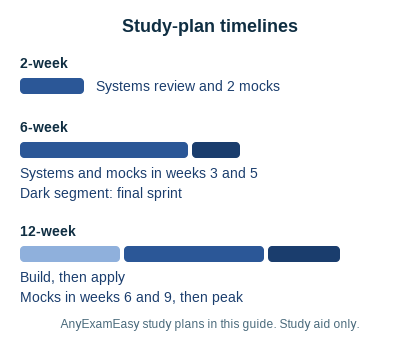
Figure: Study-plan timelines.
2-week plan
| Day | Focus | Questions |
|---|---|---|
| 1 | Format + frameworks + baseline block | 60 timed |
| 2 | Cardiovascular (11%) | 150 |
| 3 | Pulmonary (9%) | 150 |
| 4 | GI (8%) + MSK (8%) | 150 |
| 5 | Infectious (7%) + Neuro (7%) | 150 |
| 6 | Psych (7%) + Reproductive (7%) | 150 |
| 7 | Full mock (5 × 60) | 300 |
| 8 | Endocrine (6%) + EENT (6%) | 150 |
| 9 | Heme (5%) + Renal (5%) | 150 |
| 10 | Derm + GU + Professional Practice | 150 |
| 11 | Your 3 weakest systems | 120 |
| 12 | Second full mock | 300 |
| 13 | Quick refs only | 60 |
| 14 | Rest. Sleep. | — |
6-week plan
| Week | Systems | Extra |
|---|---|---|
| 1 | Cardio, Pulm | Baseline block on day 1 |
| 2 | GI, MSK, Renal | Weekly error-log review |
| 3 | ID, Neuro, Psych | Mock 1 |
| 4 | Reproductive, Endocrine, EENT | Review child and procedure items inside Reproductive, Endocrine, and EENT |
| 5 | Heme, Derm, GU, Professional Practice | Mock 2 |
| 6 | Weak areas + sprint | Mock 3 on day −7 |
Sample day: 30 min checklist → 60-question block → 60–90 min review → 3 log lines.
12-week plan
- Weeks 1–4 (Build): one system every 2–3 days, in weight order. 40–60 questions a day.
- Weeks 5–9 (Apply): mixed timed blocks. 60–90 a day. Mocks at weeks 6 and 9.
- Weeks 10–12 (Peak): 90+ a day. One mock a week. Then the sprint.
Working full-time? Protect one block each weekday. Do a full mock on weekends during the Peak phase.
Ready to practice? Explore PANCE questions on AnyExamEasy.
How PANCE works
The basics
| Fact | Detail |
|---|---|
| Where | Pearson VUE test centers |
| Questions | 300 multiple choice (5 blocks × 60) |
| Time | 60 min per block |
| Breaks | 45 min total, you manage it |
| Tutorial | 15 min |
| Total visit | About 6 hours |
Scoring and rules
| Fact | Detail |
|---|---|
| Score scale | 200–800 |
| Passing score | 350 |
| Unscored items | Some pretest items. You can't tell which. |
| Who can take it | Grads of ARC-PA–accredited programs |
| Attempt limit | 6 tries within 6 years |
| Retake spacing | Once per 90 days; max 3 per year |
| Fee | $550 application payment (NCCPA Become Certified) |
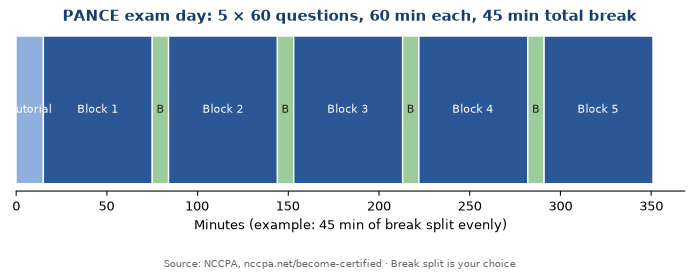
Figure: Exam-day timeline. NCCPA.
Pacing: 60 questions in 60 minutes. Train with timed 60-question blocks from week 1.
The official blueprint (effective January 2025)
Content areas (organ systems)
| Area | % of exam |
|---|---|
| Cardiovascular | 11% |
| Pulmonary | 9% |
| GI / Nutrition | 8% |
| Musculoskeletal | 8% |
| Infectious Diseases | 7% |
| Neurologic | 7% |
| Psychiatry / Behavioral | 7% |
| Reproductive | 7% |
| Endocrine | 6% |
| Eyes, Ears, Nose, Throat (EENT) | 6% |
| Professional Practice | 6% |
| Hematologic | 5% |
| Renal | 5% |
| Dermatologic | 4% |
| Genitourinary (GU) | 4% |
Task areas (what you're asked to do)
| Task | % of exam |
|---|---|
| Most likely diagnosis | 18% |
| History and physical exam | 16% |
| Clinical intervention | 16% |
| Pharmaceutical therapeutics (drugs) | 15% |
| Health maintenance and prevention | 11% |
| Diagnostic and lab studies | 10% |
| Applying foundational science | 8% |
| Professional practice | 6% |
Also from NCCPA:
- Medical content is 94% of the exam.
- 8–10% of questions cover general surgery topics.
- 12–15% focus on children (pediatrics).
What this means for you: Treatment-type tasks (drugs + intervention + prevention) are 42%. Diagnosis + history and physical are 34%. Know what it is and what to do next.
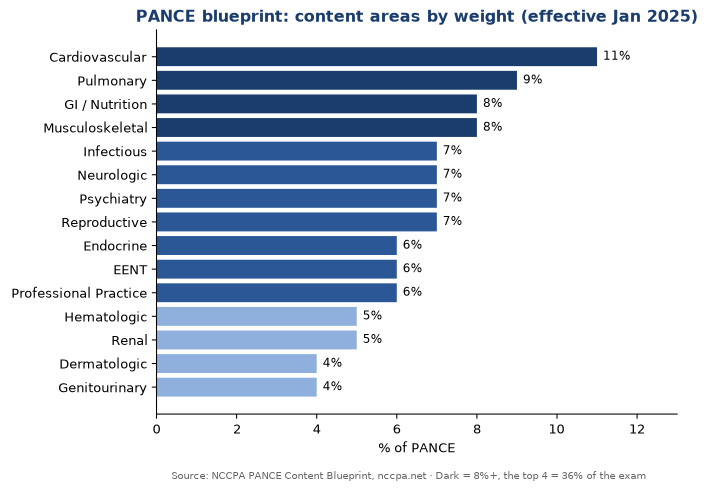
Figure: PANCE content weights. NCCPA blueprint, effective January 2025.
Official source: NCCPA PANCE Blueprint. This guide helps you prepare. It does not replace NCCPA.
Want practice that feels real? Try free PANCE questions on AnyExamEasy.
The 3 question types PANCE asks most
Every question is a short patient story. Then it asks one of three things.
1. "What is the most likely diagnosis?"
- Find the 2–3 key clues (age, timing, exam finding, lab).
- Name your top guess before reading the choices.
- Pick the common, classic answer. PANCE rarely rewards rare diseases.
2. "What is the next best step?"
- Unstable patient? Stabilize first. Airway, breathing, circulation.
- Read the word: "initial" test ≠ "best/confirmatory" test.
- Choose the least invasive test that answers the question.
3. "What is the first-line treatment?"
- Pick the guideline first-line choice.
- Then check the stem for traps: pregnancy, kidney function, allergy, age.
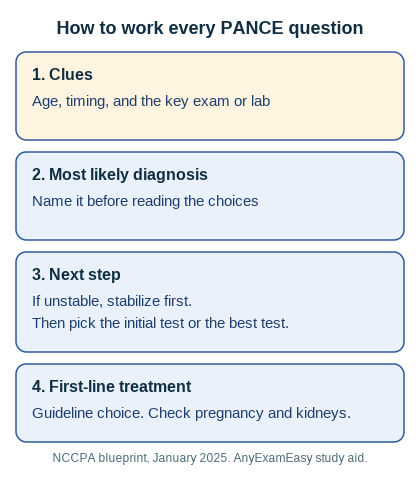
Figure: The 4-step question method.
Quick elimination tips
- Two nearly identical choices? One is often right.
- "Most appropriate" means the standard, not "something you could do."
- Child in the stem? Re-check age-based rules.
Important to remember: Diagnose → stabilize → test → treat → prevent. Ask which step the question is on.
Topic index (sorted by points)
Abbreviations are spelled out in each system section.
| System | % | Must-cover topics |
|---|---|---|
| Cardiovascular | 11 | Hypertension, ACS, heart failure, AF, lipids, murmurs, dissection, pericarditis, DVT |
| Pulmonary | 9 | Asthma, COPD, pneumonia, PE, TB, lung cancer screening, pneumothorax, croup/bronchiolitis |
| GI / Nutrition | 8 | Pancreatitis, gallbladder disease, appendicitis, GI bleed, H. pylori, hepatitis B, CRC screening |
| MSK | 8 | Fractures, Ottawa rules, gout, RA vs OA, osteoporosis, low back red flags, peds hip |
| Infectious | 7 | STIs, HIV, sepsis, meningitis, Lyme, latent TB, cellulitis |
| Neurologic | 7 | Stroke, SAH, migraine, seizures, MS, myasthenia, Guillain-Barré |
| Psychiatry | 7 | Depression, anxiety, bipolar, psychosis, substance use, drug side effects |
| Reproductive | 7 | Preeclampsia, ectopic, bleeding in pregnancy, cervical and breast screening |
| Endocrine | 6 | Diabetes, DKA, thyroid, adrenal |
| EENT | 6 | Strep throat, otitis media, red eye emergencies |
| Professional Practice | 6 | Consent, capacity, confidentiality, ethics, errors |
| Hematologic | 5 | Anemias, clotting disorders, leukemia/lymphoma |
| Renal | 5 | AKI, CKD, electrolytes |
| Dermatologic | 4 | Melanoma, cellulitis vs abscess, rashes |
| GU | 4 | UTI, BPH, prostate screening, scrotal pain |
System checklists
How to read this section
- "Classic clue" columns = standard textbook teaching points. They help you recognize a disease.
Cardiovascular (11%): your biggest block
Top 5 high-yield
- Blood pressure stages and when to start drugs
- STEMI timing: cath lab versus fibrinolytic
- Heart failure "four pillars"
- AF: when to start a blood thinner
- Statin groups
Abbreviations: BP = blood pressure. CVD = cardiovascular disease. CKD = chronic kidney disease. ACS = acute coronary syndrome. STEMI = ST-elevation heart attack. PCI = cath-lab stenting. HFrEF = heart failure with reduced ejection fraction. AF = atrial fibrillation. DOAC = direct oral anticoagulant. LDL = "bad" cholesterol. ECG = electrocardiogram. ARNI = angiotensin receptor–neprilysin inhibitor. MRA = mineralocorticoid receptor antagonist (e.g., spironolactone). SGLT2 inhibitor = a diabetes-drug class with heart and kidney benefit. CHA₂DS₂-VASc = AF stroke-risk score.
Blood pressure stages
| Stage | Top number | Bottom number |
|---|---|---|
| Normal | <120 | and <80 |
| Elevated | 120–129 | and <80 |
| Stage 1 | 130–139 | or 80–89 |
| Stage 2 | ≥140 | or ≥90 |
Stages use the systolic or diastolic cutoff. The treatment goal in the checklist is under 130/80 mm Hg. (2025 AHA/ACC high blood pressure guideline)
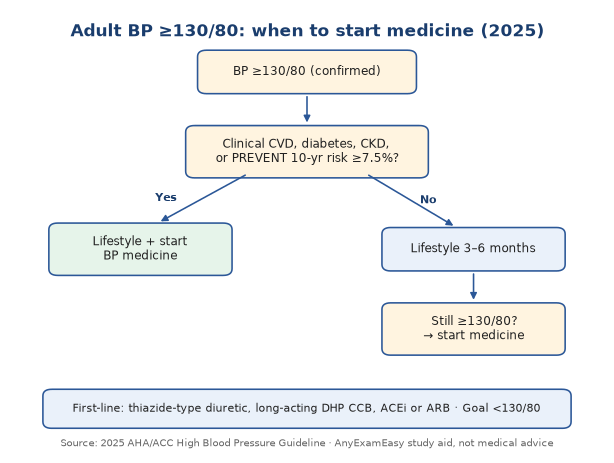
Figure: When to start BP medicine. 2025 AHA/ACC.
Checklist
- General BP goal: <130/80 mm Hg. (2025 AHA/ACC high blood pressure guideline)
- Start BP medicine at an average of 130/80 mm Hg or higher when the patient has clinical cardiovascular disease, diabetes, CKD, or a PREVENT 10-year risk of 7.5% or higher. (2025 AHA/ACC high blood pressure guideline)
- Lower risk (PREVENT under 7.5%, and no clinical cardiovascular disease, diabetes, or CKD): try lifestyle changes for 3 to 6 months. Start medicine if BP stays 130/80 mm Hg or higher. (2025 AHA/ACC high blood pressure guideline)
- First-line BP drug classes: thiazide-type diuretic, long-acting dihydropyridine calcium channel blocker, ACE inhibitor, or ARB. (2025 AHA/ACC high blood pressure guideline)
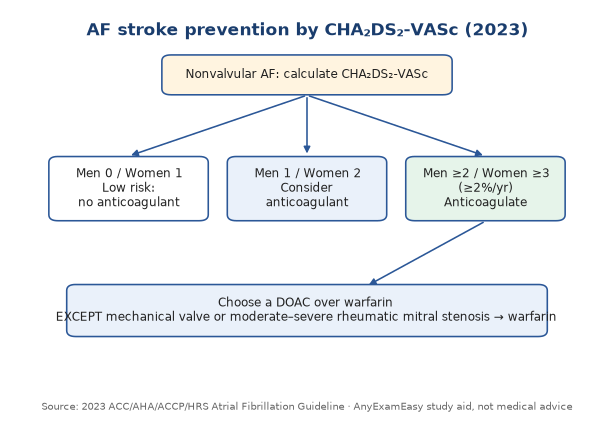
Figure: AF stroke prevention. 2023 ACC/AHA/ACCP/HRS.
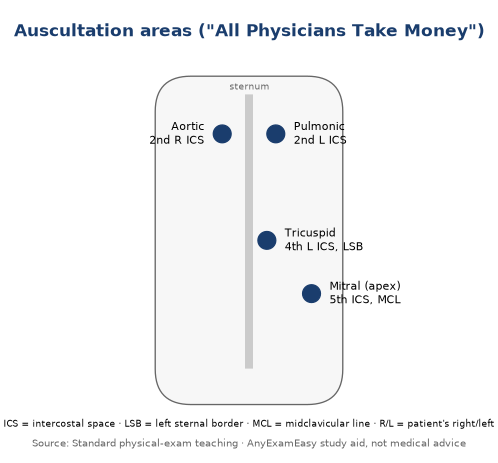
Figure: Where to listen for murmurs.
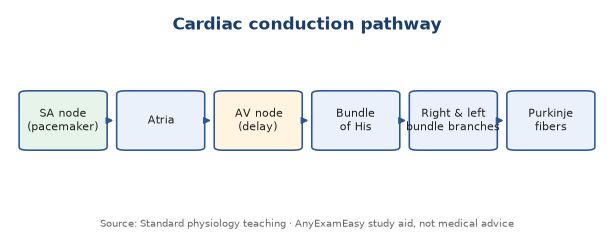
Figure: Cardiac conduction system.
Look-alike chest pain
| Disease | Classic clue (teaching point) | First test |
|---|---|---|
| Heart attack (ACS) | Pressure-like pain, risk factors | ECG |
| Pericarditis | Sharp pain, better leaning forward; diffuse ST elevation | ECG |
| Aortic dissection | Tearing pain to the back; arm BP difference | Imaging of aorta |
| Pulmonary embolism | Sudden shortness of breath, fast heart rate | See PE algorithm |
Algorithm: STEMI
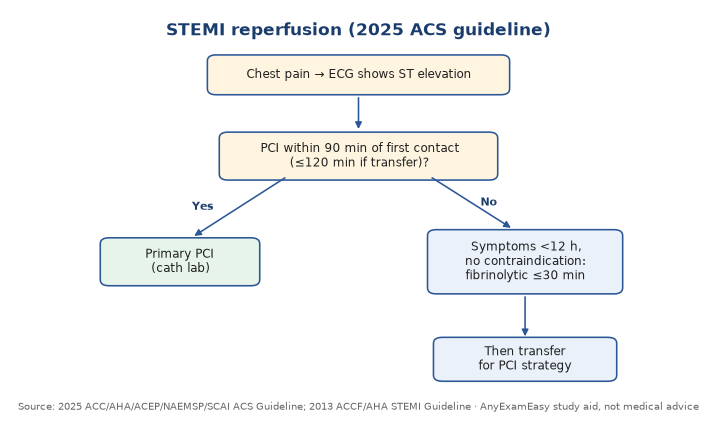
Figure: STEMI reperfusion. 2025 ACS guideline.
Important to remember
- ECG first for chest pain.
- Trap: choosing a fibrinolytic when the stem says PCI is available in time.
- The 2025 BP guideline uses the PREVENT risk tool and a 7.5% cut-off.
Pulmonary (9%)
Top 5 high-yield
- Asthma: no "rescue inhaler only" treatment
- COPD: diagnosis and first inhalers
- Outpatient pneumonia antibiotics
- PE workup
- Lung cancer screening
Abbreviations: SABA = short-acting rescue inhaler (e.g., albuterol). ICS = inhaled steroid. LABA / LAMA = long-acting bronchodilators. FEV₁/FVC = breathing-test ratio. CAP = community-acquired pneumonia. PE = pulmonary embolism. CTPA = CT pulmonary angiogram. LDCT = low-dose CT. PERC = PE rule-out criteria. V/Q = ventilation-perfusion scan.
Algorithm: suspected PE
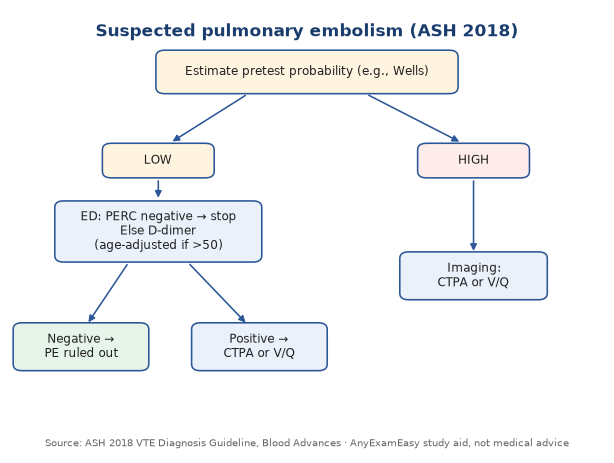
Figure: Suspected PE. ASH 2018.
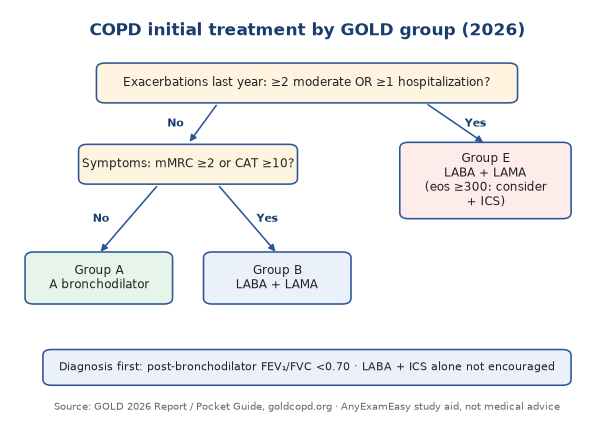
Figure: COPD groups. GOLD 2026.
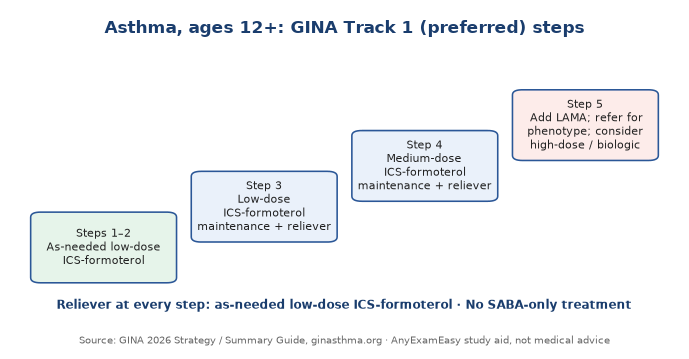
Figure: Asthma steps. GINA 2026.
Look-alike: asthma vs COPD
| Feature | Asthma | COPD |
|---|---|---|
| Typical patient | Younger, allergies | Older, smoking history |
| Breathing test | Often reversible | Often not fully reversible |
| Starting treatment | See the GINA figure | See the GOLD figure |
Important to remember
- Trap: D-dimer when probability is high. Go to imaging.
GI / Nutrition (8%)
Top 5 high-yield
- Pancreatitis diagnosis
- H. pylori first-line therapy
- Hepatitis B blood tests
- Colorectal cancer screening
- Right upper quadrant pain workup
Abbreviations: ULN = upper limit of normal. HBsAg = hepatitis B surface antigen. Anti-HBs = surface antibody. Anti-HBc = core antibody. CRC = colorectal cancer. RUQ = right upper quadrant.
Checklist
- Colorectal cancer screening: ages 45–75. (USPSTF)
Look-alike: RUQ pain (classic teaching points)
| Disease | Classic clue | Key point |
|---|---|---|
| Biliary colic | Pain after fatty meal, resolves | No fever |
| Cholecystitis | Persistent pain, fever, Murphy sign | Inflamed gallbladder |
| Cholangitis | Fever + jaundice + RUQ pain | Infected bile duct |
Musculoskeletal (8%)
Top 5 high-yield
- Ottawa ankle rules
- Gout: flare vs long-term treatment
- Rheumatoid arthritis first drug
- Osteoporosis screening
- Red flags in back pain
Abbreviations: ULT = urate-lowering therapy. RA = rheumatoid arthritis. OA = osteoarthritis. DMARD = disease-modifying drug. DXA = bone density scan.
Look-alike: joint disease (classic teaching points)
| Feature | OA | RA | Gout |
|---|---|---|---|
| Morning stiffness | <30 min | >1 hour | Varies |
| Typical joints | Knees, hips, DIP | MCP, PIP, wrists | Big toe |
| Pattern | Wear and tear | Symmetric, autoimmune | Sudden, red, hot |
Important to remember
- Ottawa rules decide who needs an X-ray.
Infectious Diseases (7%)
Top 5 high-yield
- STI regimens (gonorrhea, chlamydia, syphilis)
- Sepsis first hour
- Meningitis empiric antibiotics
- Cellulitis vs abscess
- Lyme disease
Abbreviations: STI = sexually transmitted infection. IM = injection into muscle. MAP = mean arterial pressure. I&D = incision and drainage.
STI regimens
Benzathine penicillin G in this table means Bicillin L-A (penicillin G benzathine), given by deep intramuscular injection. Do not substitute Bicillin C-R.
| Infection | First-line |
|---|---|
| Gonorrhea of the cervix, urethra, or rectum | Ceftriaxone 500 mg IM once if under 150 kg; 1 g IM once if 150 kg or more (CDC) |
| Chlamydia, adolescents and adults | Doxycycline 100 mg by mouth twice daily for 7 days (CDC) |
| Primary, secondary, or early latent syphilis | Benzathine penicillin G 2.4 million units IM once (CDC, early latent) |
| Late latent syphilis, or latent syphilis of unknown duration | Benzathine penicillin G 2.4 million units IM once a week for 3 weeks (7.2 million units total) (CDC) |
Neurosyphilis, ocular syphilis, and otosyphilis are not treated with this weekly benzathine schedule. The CDC wall chart uses aqueous crystalline penicillin G for those infections.
The 2026 FDA label for Bicillin L-A lists primary, secondary, and latent syphilis as 2.4 million units in one dose, and late syphilis (tertiary and neurosyphilis) as 2.4 million units at 7-day intervals for three doses (FDA label, 2026). The rows above follow the CDC STI Treatment Guidelines, which separate early latent disease (one dose) from late latent disease and unknown duration (weekly for 3 weeks).
During the Bicillin L-A shortage, CDC recommends preserving benzathine penicillin G for patients who are pregnant, because penicillin is the only recommended syphilis treatment in pregnancy (CDC NCHHSTP, April 14, 2026).
Important to remember
- Trap: azithromycin as "preferred" for chlamydia. Doxycycline 100 mg by mouth twice daily for 7 days is the recommended regimen for adolescents and adults. (CDC STI Treatment Guidelines)
Neurologic (7%)
Top 5 high-yield
- Acute stroke: CT first, fibrinolytic window
- Thunderclap headache workup
- Migraine first-line treatment
- Guillain-Barré vs myasthenia
- Seizure first steps
Abbreviations: CT = CT scan. LP = lumbar puncture. SAH = subarachnoid hemorrhage. tPA = alteplase. TNK = tenecteplase. CTA = CT angiogram.
Algorithm: thunderclap headache
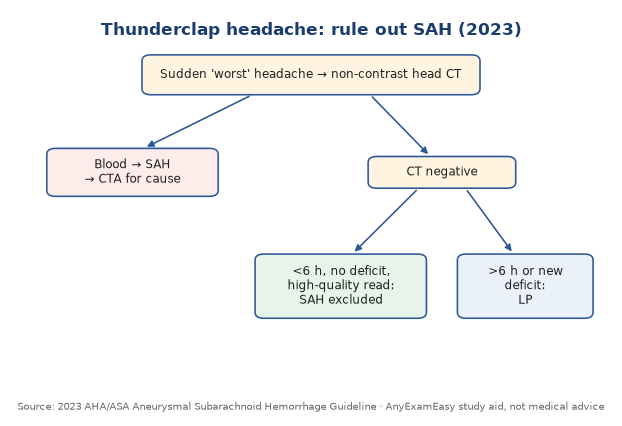
Figure: Thunderclap headache. 2023 AHA/ASA aSAH guideline.
Look-alike: weakness (classic teaching points)
| Disease | Classic clue | Pattern |
|---|---|---|
| Guillain-Barré | After an infection; reflexes gone | Rising weakness |
| Myasthenia gravis | Droopy eyelids, double vision | Worse at end of day |
| Multiple sclerosis | Vision loss, numbness, young adult | Episodes over time |
Psychiatry / Behavioral (7%)
Top 5 high-yield
- Who to screen for depression
- Who to screen for anxiety
- First-line depression treatment
- Bipolar vs depression
- Drug side-effect emergencies
Abbreviations: MDD = major depressive disorder. SSRI = selective serotonin reuptake inhibitor. SNRI = serotonin-norepinephrine reuptake inhibitor.
Important to remember
- Always check for suicide risk in a depression stem.
Reproductive (7%)
Top 5 high-yield
- Preeclampsia criteria
- Ectopic pregnancy: who gets methotrexate
- Cervical screening intervals
- Breast screening
- Bleeding in late pregnancy
Abbreviations: hrHPV = high-risk HPV test. hCG = pregnancy hormone. TVUS = transvaginal ultrasound.
Checklist
- Breast cancer screening: mammogram every 2 years, ages 40–74. (USPSTF)
Look-alike: bleeding in late pregnancy (classic teaching points)
| Disease | Pain? | Classic clue |
|---|---|---|
| Placenta previa | Painless | Bright red bleeding |
| Placental abruption | Painful | Firm, tender uterus |
Endocrine (6%)
Top 5 high-yield
- Diabetes diagnosis numbers
- Type 2 diabetes drug choice by comorbidity
- DKA criteria and potassium rule
- Diabetes screening
- Hypothyroidism treatment
Abbreviations: A1C = 3-month sugar average. FPG = fasting glucose. OGTT = glucose tolerance test. GLP-1 RA = GLP-1 receptor agonist. SGLT2i = SGLT2 inhibitor. DKA = diabetic ketoacidosis. TSH = thyroid-stimulating hormone.
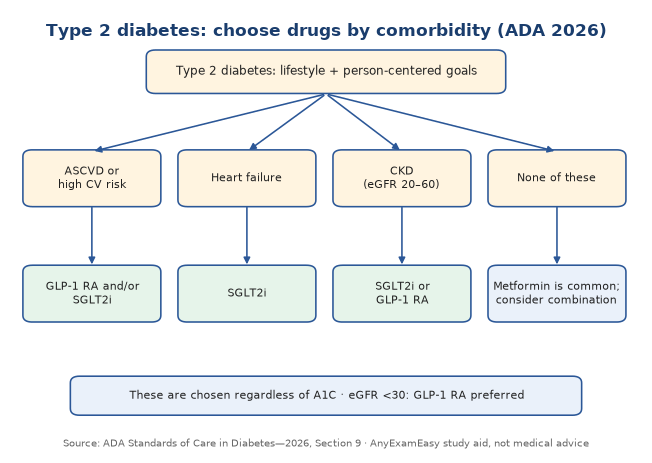
Figure: Type 2 diabetes drug choice. ADA 2026.
EENT (6%)
Top 5 high-yield
- Strep throat: test, then penicillin/amoxicillin
- Ear infection: high-dose amoxicillin
- Red-eye emergencies
- Vision loss emergencies
- Nosebleeds
Abbreviations: GAS = group A strep. RADT = rapid strep test. AOM = acute otitis media.
Look-alike: red eye (classic teaching points)
| Disease | Classic clue | Urgent? |
|---|---|---|
| Conjunctivitis | Discharge, normal vision | No |
| Acute angle-closure glaucoma | Pain, halos, mid-dilated pupil | Yes |
| Corneal abrasion | Foreign-body feeling, stain uptake | Usually no |
Important to remember: Painful red eye + vision change = emergency until proven otherwise.
Professional Practice (6%)
Top 5 high-yield
- Decision-making capacity
- Informed consent
- Confidentiality (HIPAA)
- Telling patients about errors
- Minors and consent
Checklist (core concepts; follow your state law and employer policy)
- Capacity = the patient can understand, appreciate, reason, and state a choice.
- Informed consent covers risks, benefits, and alternatives (including no treatment).
- Share health information only as HIPAA allows.
- Medical errors: be honest with the patient; report through your system.
Important to remember: Capacity is clinical and decision-specific. Competence is a legal ruling.
Hematologic (5%)
Top 5 high-yield
- Iron deficiency diagnosis
- Microcytic anemia look-alikes
- Platelet disorders
- Clotting tests
- Leukemia/lymphoma clues
Abbreviations: MCV = mean corpuscular volume (average red-cell size).
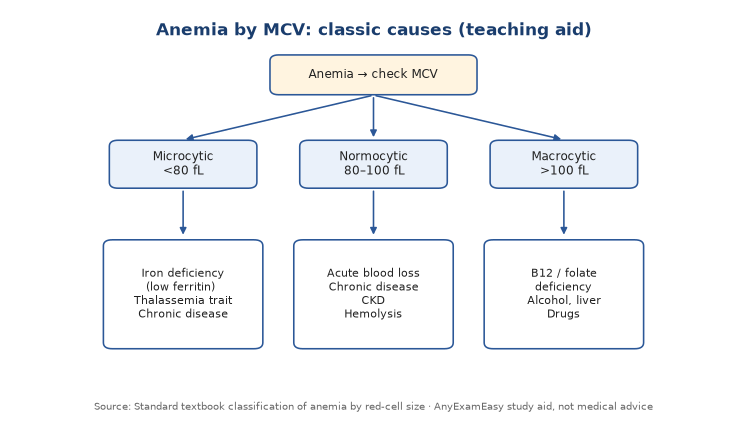
Figure: Anemia by red-cell size. Teaching aid for recognition, not a ferritin cutoff.
Look-alike: small red cells (microcytic) (classic teaching points)
| Disease | Ferritin | Key clue |
|---|---|---|
| Iron deficiency | Low | Blood loss, heavy periods |
| Thalassemia trait | Normal | Family history, mild anemia |
| Anemia of chronic disease | Normal/high | Chronic illness |
Important to remember: Iron deficiency in an older adult → look for GI blood loss.
Renal (5%)
Top 5 high-yield
- AKI definition
- CKD definition and stages
- Potassium emergencies
- Sodium problems
- Kidney stones
Abbreviations: AKI = acute kidney injury. CKD = chronic kidney disease. GFR = kidney filtering rate. ACR = urine albumin-to-creatinine ratio.
Dermatologic (4%)
Top 5 high-yield
- Melanoma ABCDEs and biopsy
- Cellulitis vs abscess
- Psoriasis vs eczema
- Burns
- Drug rashes (SJS)
Look-alike: scaly rash (classic teaching points)
| Feature | Psoriasis | Eczema |
|---|---|---|
| Where | Elbows, knees, scalp | Flexures (inside elbows, knees) |
| Look | Silvery plaques | Dry, itchy patches |
Important to remember: Melanoma ABCDE = Asymmetry, Border, Color, Diameter, Evolving.
Genitourinary (4%)
Top 5 high-yield
- Simple bladder infection (cystitis)
- BPH first-line drugs
- Prostate cancer screening
- Testicular torsion vs epididymitis
- Kidney/bladder stones
Abbreviations: UTI = urinary tract infection. TMP-SMX = trimethoprim-sulfamethoxazole. BPH = enlarged prostate. LUTS = urinary symptoms. PSA = prostate blood test.
Checklist
- PSA screening: for men 55–69, screening is an individual decision after a discussion of benefits and harms. Do not screen men 70 or older. (USPSTF)
Look-alike: scrotal pain (classic teaching points)
| Disease | Classic clue | Cremasteric reflex |
|---|---|---|
| Testicular torsion | Sudden severe pain, teen, high-riding testis | Absent |
| Epididymitis | Gradual pain, fever, urinary symptoms | Present |
Important to remember: Sudden scrotal pain in a teen = torsion until proven otherwise.
Common traps
| Trap | Fix |
|---|---|
| Answering "best test" when the stem asks "initial" | Underline the question first |
| Missing pregnancy, kidney disease, or allergy | Scan the stem before choosing |
| Studying small systems first | Work the index from the top |
| Ignoring kids (12–15%) and surgery (8–10%) | Review those items inside Reproductive, Musculoskeletal, Gastrointestinal, and the other organ-system categories |
| Using a rule with no source on the line | Open the linked official page before you memorize a dose |
| Fading in blocks 4–5 | Do at least 2 full mocks |
The 4-box error log
- System + task (example: Pulm / drugs)
- Why you missed it: didn't know · misread · missed a trap · changed answer
- The correct rule in one sentence
- Tomorrow's drill: 10 similar questions
Practice scores are not PANCE scores. Watch trends: fewer misreads, stronger big systems, steady 1-minute pace.
Exam day + final sprint
7-day sprint
| Day | Do this |
|---|---|
| −7 | Full 5-block mock + error log |
| −6 | Cardio + Pulm weak spots |
| −5 | GI + MSK + ID |
| −4 | Neuro + Psych + Reproductive |
| −3 | Child and procedure items in Reproductive, Musculoskeletal, and Gastrointestinal, plus Professional Practice |
| −2 | Quick refs only |
| −1 | Light review, logistics, sleep |
Exam-day checklist
- Valid ID that meets current NCCPA/Pearson VUE rules (check before test day)
- Arrive early
- Plan your 45 min of breaks (e.g., a short one after each block)
- About 1 minute per question. Mark and move.
- Each item: diagnosis, next step, or treatment?
- Eat and breathe between blocks
- After: check your NCCPA account for results
Quick refs
Screening (USPSTF)
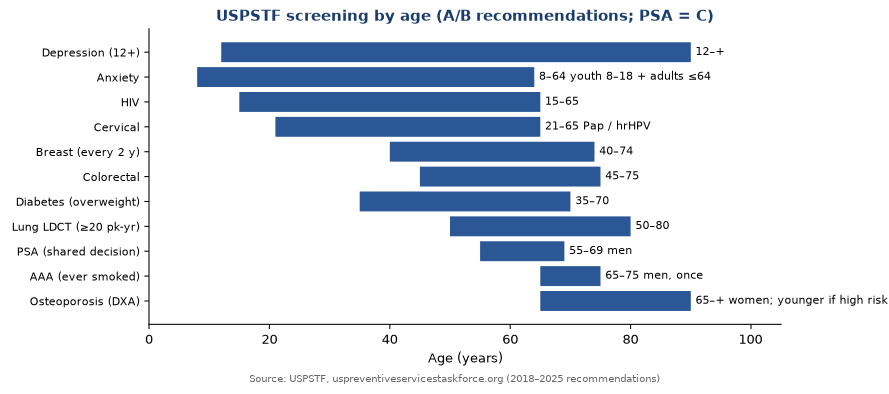
Figure: Screening ages. The table lists the ages checked against the current USPSTF pages.
| Test | Who | Source |
|---|---|---|
| Colorectal | 45–75 | USPSTF |
| Breast | Every 2 years, 40–74 | USPSTF |
| PSA | Men 55–69: individual decision. Do not screen at 70 or older. | USPSTF |
"First test" pairs
| Situation | First step |
|---|---|
| Chest pain | ECG |
FAQ
How many questions are on PANCE, and how long is it?
300 multiple-choice questions in 5 blocks of 60. You get 60 minutes per block, 45 minutes of total break time, and a 15-minute tutorial. Plan for about six hours.
What score do I need to pass PANCE?
PANCE is scored from 200 to 800. The passing score is 350.
Which PANCE topics are weighted most?
Cardiovascular (11%), Pulmonary (9%), GI/Nutrition (8%), and Musculoskeletal (8%). By task, "most likely diagnosis" is the biggest at 18%.
How long should I study for PANCE?
Most people plan 2 to 12 weeks. Choose based on how fresh your content is. Daily timed practice matters most.
How many times can I take PANCE?
Up to six times within six years. You can test once every 90 days, and no more than three times a year.
What's the difference between PANCE, PANRE, and PANRE-LA?
PANCE is your first certification after PA school. PANRE and PANRE-LA are recertification options for certified PAs. PANRE is a single test-center exam. PANRE-LA is answered online over several quarters.
Can AnyExamEasy help me prepare for PANCE?
This book is a study aid. It is independent and not affiliated with NCCPA. Practice items are a separate part of preparation. The book does not promise a score.
Before test day
PANCE rewards clear thinking about common problems.
What is it? What is next? What is first-line? Practice those three questions.
Appendix A: Exam facts and sources (checked 2026-10-24)
| # | Fact | Source |
|---|---|---|
| A1 | Blueprint %s (effective Jan 2025); 94% medical; surgery 8–10%; peds 12–15% | NCCPA Blueprint · PDF |
| A2 | 5 × 60 Qs; 60 min/block; 45 min breaks; 15 min tutorial; 6 yrs/6 attempts; 90-day/3-per-year; $550 | NCCPA Become Certified |
| A3 | Scale 200–800; pass 350; pretest items | NCCPA Exam Development & Scoring |
| A4 | PANRE (4 × 60, test center) and PANRE-LA (25 Qs/quarter, up to 12 quarters); $350 | NCCPA Maintain Certification |
"Classic clue" table cells are standard textbook teaching points for recognizing disease. They are not treatment recommendations.
AnyExamEasy is independent. It is not affiliated with or endorsed by the National Commission on Certification of Physician Assistants (NCCPA). PANCE®, PANRE®, and PA-C® are trademarks of NCCPA. We do not guarantee exam results, certification, licensure, or employment. Always follow policies in official NCCPA materials.