Endocrine
Endocrine stems reward regimen design, hypo prevention, device counseling, sick-day rules, thyroid replacement timing, and steroid taper/stress-dose awareness. Modern Type 2…
Endocrine
Study aid only. Glucose targets and regimens are individualized. Not dosing advice for real patients.
Why it matters on NAPLEX
Endocrine stems reward regimen design, hypo prevention, device counseling, sick-day rules, thyroid replacement timing, and steroid taper/stress-dose awareness. Modern Type 2 diabetes care is comorbidity-driven: ASCVD, HF, and CKD often pick the second agent before A1C vanity alone.
Topic A — Type 2 diabetes (comorbidity-driven therapy)
Source: ADA Standards of Care in Diabetes, 2026.
Key concepts
- Lifestyle + metformin foundation for many (if tolerated/eGFR allows).
- Metformin and kidney function — AnyExamEasy dosing rule (based on FDA labeling and KDIGO); follow label:
| eGFR (mL/min/1.73 m²) | Metformin use |
|---|---|
| ≥45 | Full dose when otherwise appropriate |
| 30–44 | Do not start; if already on metformin, halve the dose (maximum 1,000 mg/day) |
| <30 | Discontinue |
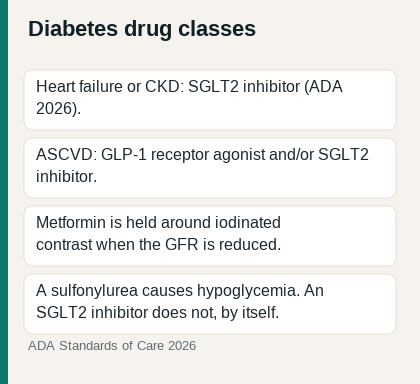
- Add agents by comorbidity: ASCVD/HF/CKD → SGLT2 and/or GLP-1 RA independent of A1C in modern algorithms (ADA Standards of Care 2026 Standards and FDA labeling).
- Avoid therapeutic inertia; also avoid stacking hypo-prone agents carelessly.
- Injection technique and storage for GLP-1 RAs / insulin.
- Weight, cost, hypoglycemia risk, and patient preference still matter.
Class comparison table
| Class | Efficacy pattern | Key risks / pearls |
|---|---|---|
| Metformin | Foundation | GI; B12 long-term; lactic acidosis rare — eGFR rules |
| SGLT2i | CV/renal benefit | Genital mycotic, volume depletion, euglycemic DKA rare; amputation/Fournier rare boxed — counsel hygiene |
| GLP-1 RA | Weight + CV benefit (agent-specific) | GI; boxed caution (MEN2/MTC history); titrate slowly |
| Dual GIP/GLP-1 | Potent weight/A1C | GI titration; same counseling discipline as GLP-1 class |
| DPP-4i | Modest A1C | Weight neutral; HF caution with saxagliptin; don’t stack with GLP-1 |
| Sulfonylurea | Cheap A1C drop | Hypoglycemia; weight gain; caution elderly |
| TZD | Insulin sensitizer | Edema/HF; fracture; bladder cancer caution for pioglitazone historically |
| Insulin | Most potent | Hypo; education intensive |
Assessment cues
- Hypoglycemia unawareness.
- eGFR for metformin/SGLT2 dosing/continuation.
- Gastroparesis affecting absorption / GLP-1 GI intolerance.
- Steroid-induced hyperglycemia.
- Heart failure symptoms before starting TZD.
Treatment priority sketch
Source: ADA Standards of Care in Diabetes, 2026.
- Metformin if appropriate.
- Layer SGLT2/GLP-1 for cardiorenal indications when eligible.
- Address persistent hyperglycemia with additional agents/insulin.
- De-intensify hypo-causing agents in elderly / low A1C with frailty.
Counseling
- Hypo treatment (15-15 rule) for insulin/secretagogues; glucagon access when high risk.
- SGLT2: stop before surgery/prolonged fasting per protocols; hydration; genital hygiene.
- GLP-1: eat smaller meals; report severe abdominal pain (pancreatitis concern); missed-dose rules per product.
- Foot care; screenings (eye, kidney, feet).
- Sick-day: when to check more often; when to call.
Safety / red flags
Red flag: Combining GLP-1 RA + DPP-4i generally not useful. Pioglitazone in symptomatic HF. Insulin U-500 confusion.
Remember this
- Match second agent to ASCVD/HF/CKD first when indicated.
- Metformin + eGFR rules.
- Hypo education whenever risk exists.
Topic B — Insulin therapeutics
Source: ADA Standards of Care in Diabetes, 2026.
Key concepts
- Basal vs bolus vs premix roles.
- Correct stacking / “insulin on board” concepts.
- Sick-day: never stop insulin blindly in T1; ketone checking.
- Concentrated insulins and pens: brand-specific counseling.
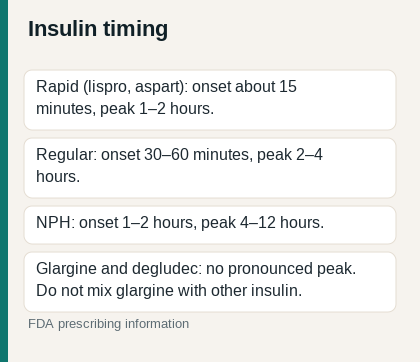
- Peak timing: rapid-acting with meals; basal relatively peakless (product-specific).
Onset/peak/duration teaching pattern
| Type | Role hooks |
|---|---|
| Rapid (lispro/aspart/glulisine) | Meals / corrections |
| Regular | IV infusions; some meal use |
| NPH | Intermediate; peaks → hypo risk |
| Basal analogs (glargine/detemir/degludec) | Background coverage |
| U-500 regular | Severe insulin resistance — special counseling |
Acute crises (pharmacist lens)
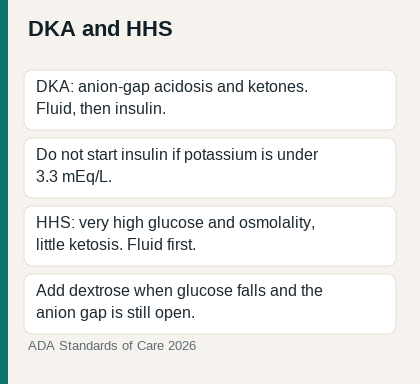
- DKA/HHS: fluids, insulin infusion protocols, potassium repletion vigilance — inpatient team sport.
- Outpatient: recognize precipitants (infection, missed insulin, SGLT2 + stress).
- Euglycemic DKA on SGLT2: nausea/vomiting/fatigue with near-normal glucose — don’t dismiss.
Hypoglycemia management
- Conscious: ~15 g fast carbs; recheck ~15 min; repeat; then protein/complex carb per plan.
- Unconscious: glucagon (IM/IN/SC products); call emergency services; IV dextrose inpatient.
- Review cause: dose error, skipped meal, exercise, alcohol, renal decline.
Topic C — Thyroid disorders
Key concepts
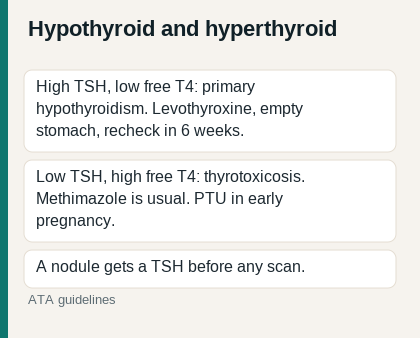
- Levothyroxine: morning empty stomach; separate from cations/binders; consistent product when possible.
- TSH monitoring timing after dose changes (~4–6 weeks).
- Hyperthyroidism: methimazole preferred in many non-pregnant; PTU in first trimester historically.
- Agranulocytosis counseling (fever/sore throat) for thionamides.
- Thyroid storm / myxedema = emergencies (supportive + directed therapy).
- Amiodarone and lithium can derange thyroid — monitor.
Hypo vs hyper counseling contrast
| Hypothyroid on LT4 | Hyperthyroid on thionamide |
|---|---|
| Empty stomach consistency | Report fever/sore throat ASAP |
| Separate iron/Ca/PPI timing issues | Hepatotoxicity awareness (esp. PTU) |
| Don’t titrate daily by mood | Adherence prevents storm |
Remember this
- Empty-stomach levothyroxine + separate binders.
- Don’t adjust doses daily based on symptoms alone — use labs timed properly.
Topic D — Adrenal / corticosteroids
Key concepts
- Physiologic vs pharmacologic dosing.
- Taper after prolonged use to avoid adrenal crisis.
- Stress dosing education for adrenal insufficiency.
- Long-term risks: infection, osteoporosis, hyperglycemia, hypertension, mood, PUD risk with NSAIDs.
- Inhaled/intranasal/topical steroids still add to cumulative burden in high doses.
Pharmacist crisis prevention
Counsel medical alert habits for adrenal insufficiency; never abrupt-stop chronic steroids; vomiting/illness → stress-dose plan per clinician.
Topic E — Osteoporosis & reproductive hormones
Osteoporosis
- Bisphosphonates / denosumab vs anabolics (specialty).
- Oral bisphosphonate: upright 30–60 min, full glass water, separate cations; rare ONJ/atypical fracture awareness; dental exam before start.
- Denosumab: rebound vertebral fracture risk if delayed/stopped without plan.
- Calcium/vitamin D foundation; fall prevention.
- IV zoledronic acid: renal function, flu-like reaction counseling.
Contraception / hormones
- CHC: VTE / migraine-with-aura / smoking-age cautions.
- Enzyme-inducing ASMs/rifampin reduce CHC efficacy — backup methods.
- Emergency contraception timing.
- Menopausal HRT: individualized risk framing (VTE, breast cancer, timing from menopause).
- Testosterone/estrogen therapy: hematocrit, VTE, prostate monitoring when stemmed.
Remember this
- Bisphosphonate sit-upright counseling prevents esophagitis.
- Inducers + CHC = pregnancy risk counseling.
Topic F — Type 1 diabetes & technology
- Always need insulin — never “oral only.”
- Carb counting / ICR / ISF concepts at exam level.
- CGM/pump: site rotation; hypo alarms; sick-day ketone checks.
- Honeymoon phase doesn’t mean stop insulin casually.
Pharmacist ISCM vignettes
Vignette 1 — T2D + HFrEF
I: Add SGLT2 if eligible after metformin. S: Volume status, eGFR, genital infection history, DKA risk with low carb/surgery. C: Hygiene, hydration, sick-day hold rules. M: Weight, BP, Cr/eGFR, genital symptoms, A1C.
Vignette 2 — New levothyroxine
I: Hypothyroidism replacement. S: CAD start-low in elderly; interactions. C: Empty stomach; separate coffee/cations per labeling habits; consistent brand when possible. M: TSH in 4–6 weeks; symptoms; AF signs if over-replaced.
Vignette 3 — Chronic prednisone
I: Autoimmune flare course extending weeks. S: Infection, glucose, BP, mood, bone; taper plan. C: Take with food; don’t stop abruptly; infection warning. M: Glucose, BP, weight; consider bone protection if prolonged.
Concept checks
Source: 2022 AHA/ACC/HFSA heart failure guideline.
1. T2D + HFrEF — preferred add-on class after metformin (if eligible)?
A. Sulfonylurea first always B. SGLT2 inhibitor C. Meglitinide D. Hot thyroid hormone
Answer: B.
2. Levothyroxine counseling pearl?
A. Take with iron for better absorption B. Take consistently on empty stomach; separate from iron/calcium C. Double dose if tired that day D. Crush and mix with soy milk always
Answer: B.
3. Why avoid DPP-4i + GLP-1 RA together?
A. Synergy mandatory B. Little added benefit / not useful stacking C. Required by REMS D. Cancels metformin
Answer: B.
4. First step for conscious hypoglycemia on insulin?
A. Long-acting insulin bolus B. ~15 g fast-acting carbohydrate; recheck C. Ignore until next meal D. High-dose aspirin
Answer: B.
5. Oral bisphosphonate key counseling?
A. Lie down immediately after B. Upright 30–60 min with full glass water; separate cations C. Take with milk always D. Crush and put in juice
Answer: B.
Topic G — Hyperglycemia hospital & steroid
Steroid bursts raise glucose — anticipate, don’t wait for crisis. NPH or correctional algorithms often appear in hospital protocols; hold parameters prevent stacking. Transition back to home regimen carefully at discharge; ensure patients on new insulin leave with supplies, education, and hypo plan. Tube feeds / TPN need basal coverage strategies — coordinate with nutrition.
Weight-management overlap
GLP-1 and dual agonists used for weight may appear in stems with GI titration and gallbladder/pancreatitis caution. Distinguish compounding “research” pens (unsafe) from approved products — counsel FDA-approved pathways only.
Continuous glucose monitoring counseling
Explain sensor warm-up, acetaminophen/interference for some older sensors (product-specific), when to confirm with fingerstick (hypo symptoms, discordant values), and alarm fatigue. CGM does not replace ketone checks in T1 sick days.
Topic H — Osteoporosis decision tree (pharmacist)
- Assess fracture history, DEXA, fall risk, calcium/vit D intake.
- Address reversible causes (hyperthyroid, steroids, smoking, alcohol, hypogonadism).
- Antiresorptive vs anabolic referral for very high risk.
- Counsel administration meticulously — technique failures cause esophagitis or missed denosumab doses.
- Dental health before IV/high-potency antiresorptives when possible.
- Plan the exit strategy for denosumab (transition to bisphosphonate) to prevent rebound fractures.
Thyroid + AF / osteoporosis links
Over-replacement with LT4 can worsen AF and bone loss — especially elderly. Titrate to age-appropriate TSH targets per guidance.
Adrenal vignette expansion
Patient on prednisone 20 mg for 8 weeks stopping tomorrow “because they feel better” → intervene: taper plan, adrenal crisis education, sick-day rules. Stress-dose cards for known adrenal insufficiency are lifesaving counseling.
Diabetes + CKD deep hooks
- Metformin eGFR cutoffs/dose adjustments.
- SGLT2 renal indications may extend to nondiabetic CKD.
- Avoid repeated nephrotoxins; ACEI/ARB kidney protection in albuminuric CKD.
- Hypoglycemia risk rises as GFR falls for insulin/sulfonylureas — de-intensify.
Insulin pen safety
Prime pens; hold after injection; never share pens (bloodborne pathogen risk even with new needles); match pen needles; store in-use pens per product (often room temp time-limited). U-500: only with dedicated pen/syringe education.
Remember this (chapter close)
- Comorbidities pick many T2D add-ons.
- Hypoglycemia plans are part of the prescription.
- Thyroid timing and steroid tapers are high-yield pharmacist saves.
Topic I — Reproductive endocrine & PCOS (brief)
PCOS may involve metformin, combined hormonal contraceptives for cycle regulation when safe, anti-androgens specialty, and fertility pathways — screen VTE risk before CHC. Counsel weight, glucose screening, and endometrial protection. For gestational diabetes, insulin is classic preferred pharmacologic; metformin/glyburide nuances exist in practice. Postpartum thyroiditis can confuse LT4 needs — don’t adjust wildly without labs.
Pituitary / prolactin
Dopamine agonists (cabergoline/bromocriptine) for hyperprolactinemia: counsel nausea, orthostasis, impulse-control rare; take with food if needed. Interacting antipsychotics that raise prolactin may appear as cause — coordinate with psychiatry before abrupt stops.
Exam-day endocrine checklist
- Cardiorenal agent before SU when indicated
- Empty-stomach LT4
- Upright bisphosphonate
- Steroid taper / stress dose
- Glucagon + 15-15 for hypo risk
- SGLT2 sick-day / surgery holds
- No GLP-1 + DPP-4 stack
- DKA/HHS = fluids, insulin, K vigilance
Final endocrine traps
SU in frail elderly with tight A1C → de-intensify. TZD + HF symptoms → stop/avoid. Missed denosumab dose → urgent reschedule/plan. LT4 with breakfast coffee and multivitamin → absorption fail. SGLT2 before bariatric bowel prep / surgery without hold → DKA risk. Insulin pen sharing → never.
When in doubt on NAPLEX endocrine stems: protect the heart and kidney first in T2D, prevent hypoglycemia, time thyroid correctly, taper steroids safely, and treat osteoporosis counseling as a fall-and-fracture prevention skill—not a footnote.
Follow ADA Standards of Care and product labeling whenever A1C targets, eGFR cutoffs, or pregnancy guidance appear on exam stems.